A 140-year story
Our history.
The story of the Order's commitment to caring for its elder members in California — from an unfinished hotel on the Feather River to two of the most beautiful retirement campuses in the state.
A 140-year story
The story of the Order's commitment to caring for its elder members in California — from an unfinished hotel on the Feather River to two of the most beautiful retirement campuses in the state.
1886 – 1913
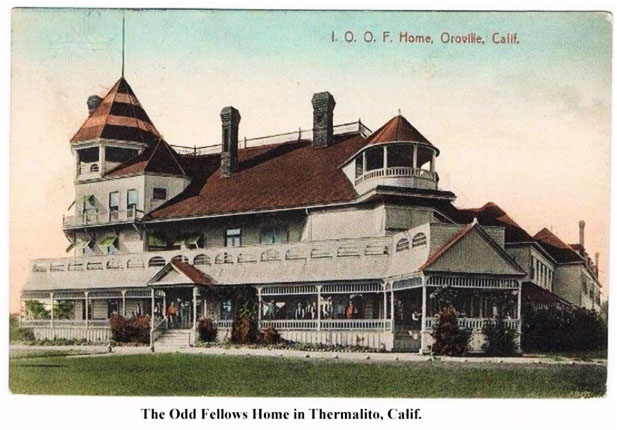
The story of the Odd Fellows' commitment to caring for their elderly members in California begins not with a home, but with a dream of a prosperous community. That dream was born in 1886 in the Thermalito Land Colony, founded by three enterprising men — Edward W. Fogg, Albert F. Jones, and Frank McLaughlin. A banker, an attorney, and a mining engineer, they were not only visionaries but also devoted members of the Independent Order of Odd Fellows. Together they set out to create a thriving agricultural community along the Feather River, just west of Oroville.
Their grand plan envisioned a colony of fruit orchards, nurtured by the temperate climate and fertile soil of the region. They laid out the community with meticulous detail — twelve miles of graded avenues, forty-acre lots offered to eager newcomers. At the heart of this budding settlement would stand the Bella Vista Hotel, perched on the high bluff overlooking the river. The hotel was to be a symbol of the colony's prosperity, attracting visitors and settlers alike.
Construction began in 1888, with hopes of welcoming the first guests the following year. But as the walls rose, so did the challenges. The project was underfunded from the start. The anticipated influx of settlers never materialized. The United States was teetering on the brink of an economic depression that would culminate in the financial crisis of 1893. Work slowed, then halted altogether, leaving the building unfinished and burdened with a $3,000 lien — a considerable sum at the time.
By 1895, with no buyer in sight and their dream fading, the three founders made a remarkable decision. Embracing the Odd Fellows' principles of Friendship, Love, and Truth, they chose to donate the building to the IOOF. The gift was offered as "a free gift," and the lien was paid off by the generous citizens of Oroville, ensuring the Odd Fellows Home could begin its new life unencumbered.
What was intended to be a grand hotel transformed into something far more meaningful — a sanctuary for the elderly members of the Order. The IOOF completed the construction in 1896, adapting the unfinished structure to serve as a home for aged and indigent members. By the end of that year, seventy-nine applications had been approved, and sixty-nine residents had moved into their new home — a place of dignity and care amid the golden hills of Northern California.
The Thermalito Home flourished. In 1897 the Order purchased additional property, expanding holdings from eight to eighty-five acres. A forty-room annex was added, along with a laundry, storehouse, barn, stables, and even a cemetery. By 1907 the Home accommodated 320 residents. The property was leased for gold dredging in 1908, providing additional income. A hospital was built on site in 1905, lost to fire in 1908, and rebuilt the following year.
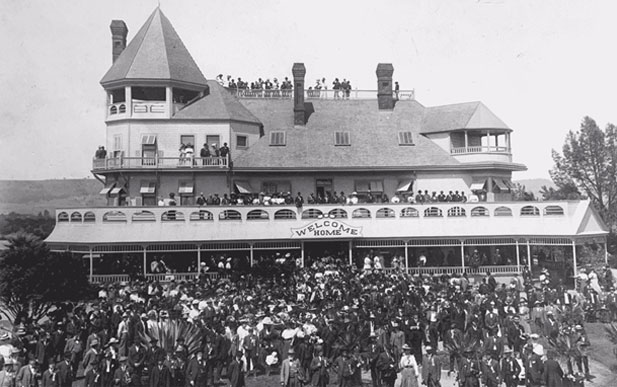
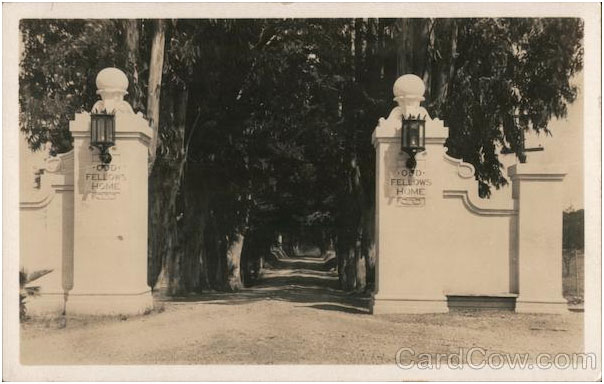
But the complaints about the heat and insects, combined with the desire for a more accessible location, led the statewide Odd Fellows organization to make a difficult decision. In 1913, the residents were moved to a new facility constructed in Saratoga, in the cooler, more hospitable climate of Santa Clara County. The people of Oroville accompanied the Odd Fellows to the train station, bidding farewell to friends and neighbors they had come to cherish. Today, only the cemetery and the stately palms lining the original drive remain — silent witnesses to a once-thriving community.
1912 – 2001
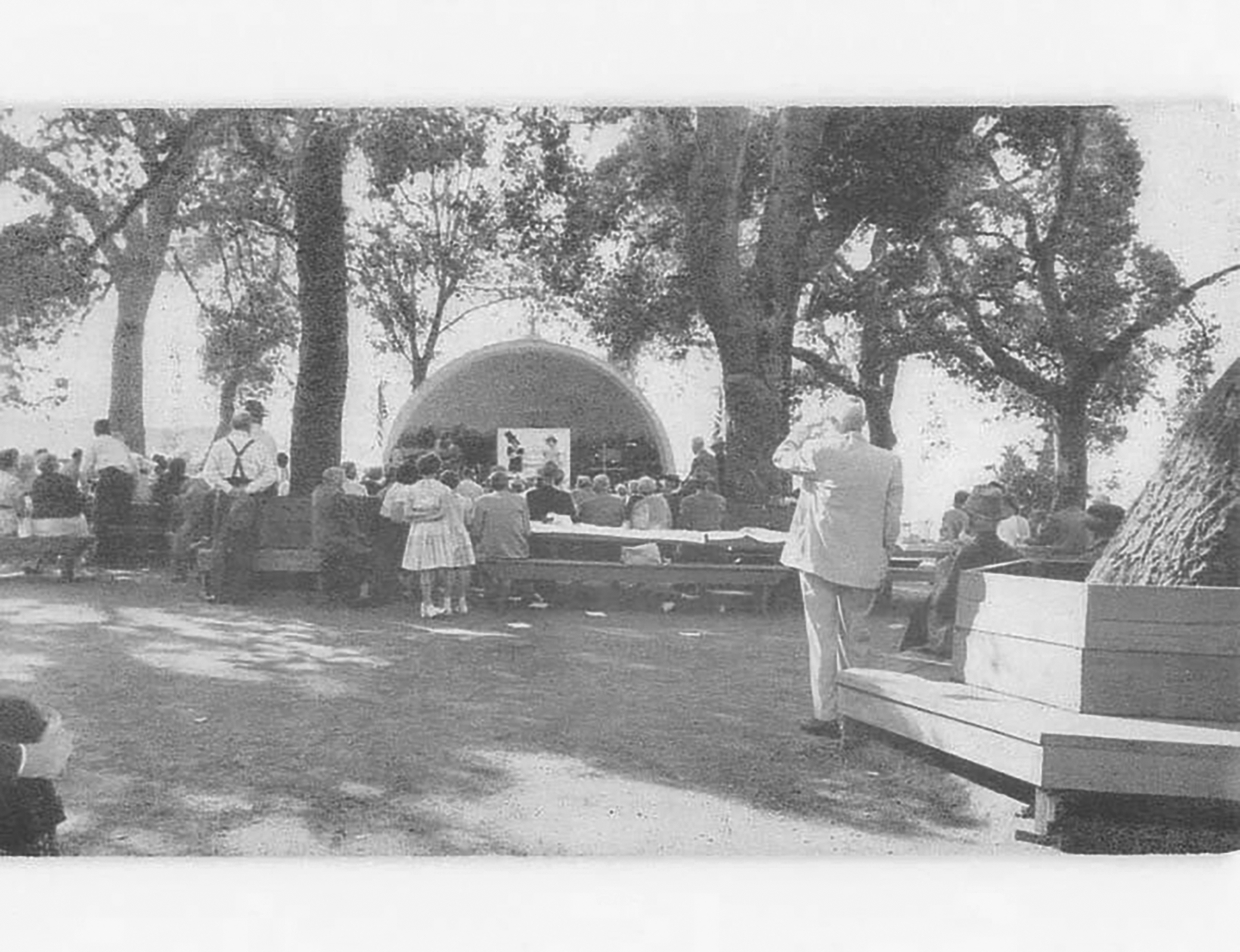
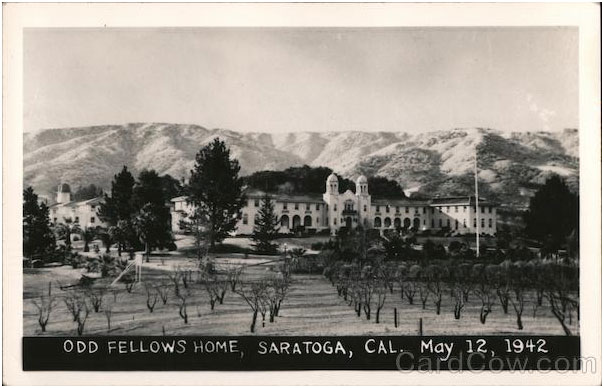
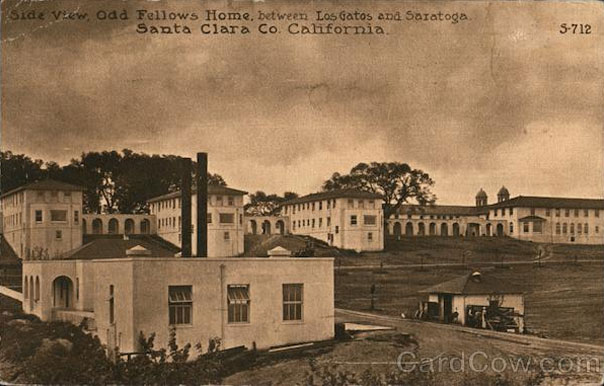
As the Thermalito chapter came to a close, the Order's commitment to its elderly members only grew stronger. In 1912 the Grand Lodge of California founded a new Odd Fellows retirement home in the scenic town of Saratoga, nestled at the base of the Santa Cruz Mountains. The location was chosen not only for its beautiful surroundings but for its temperate climate — a serene and comfortable environment for the Order's elder members. The new facility, established as a nonprofit public benefit corporation under California law, was aptly named the Odd Fellows Home of California.
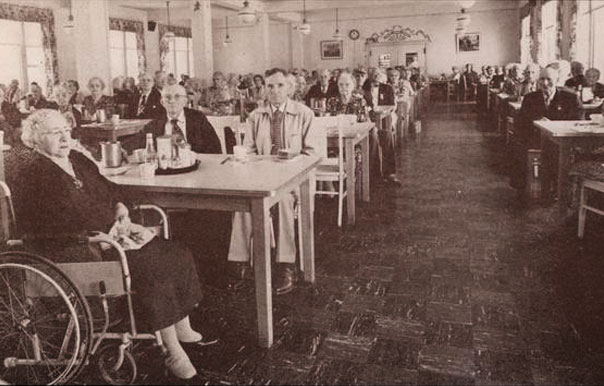
The Saratoga Home, governed by a Board of Trustees elected by representatives of the Grand Lodge, quickly became a beacon of hope and care. In 1964 the Grand Lodge voted to include members of the Rebekah Assembly — the sister organization of the Odd Fellows — on the Board, strengthening the bond between the two branches of the Order.
By the early 1990s the Grand Lodge recognized the need to further extend its reach. In 1992, the Order purchased a senior retirement facility in the picturesque Napa Valley. This new addition, initially named California Odd Fellows Housing of Napa, Incorporated, soon became known as The Meadows of Napa Valley.
In 2001, in a strategic move to unify and streamline operations, the Grand Lodge voted to merge the Odd Fellows Home of California and California Odd Fellows Housing of Napa, Inc. into a single corporation under the name Odd Fellows Home of California. The following year, the Grand Lodge took another bold step to secure the future of the organization, voting to add four At-Large Directors from the professional sector — experts in law, accounting, medicine, and finance — to the Board.
2000 – 2021
The turn of the millennium brought significant hurdles. By 2000 the organization was facing substantial financial losses. Determined to overcome these setbacks, OFHC and its operating partner implemented major operational changes over the next two years, striving to achieve savings and stabilize finances.
In 2003, faced with ongoing difficulties, OFHC borrowed funds from the Grand Lodge to sustain operations and successfully secured Cal-Mortgage approval for an $80 million loan to fund the construction of Phase II at Saratoga. In 2005, the expansion opened on schedule and within budget. The newly expanded facilities quickly filled.
In 2007 the city of Napa granted approval to expand the Meadows of Napa Valley campus, allowing the community to offer a broader range of care options. By 2009 the first transformation of the MNV campus was complete, with three phases of construction and renovation bringing new life to the community. In 2012, OFHC refinanced $100 million through Cal-Mortgage, generating $2.8 million in annual savings.
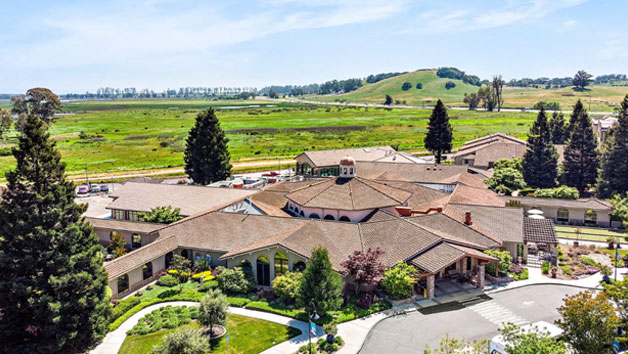
In 2014, OFHC received the final Certificate of Authority for MNV, officially converting it to a CCRC. In 2016, OFHC achieved an investment-grade rating of BBB– from Fitch, reflecting the organization's improved financial health. That same year, additional MNV expansion was financed using a 2016 bond with a drawdown bank loan — avoiding Cal-Mortgage insurance and saving $1.7 million.
In 2021, the MNV expansion was completed, providing more amenities and services for residents. In a remarkable show of fiscal responsibility, OFHC paid down $67 million of debt — and Fitch upgraded the organization's rating to BBB.
1998 – 2026
For more than a quarter century — from 1998 through 2026 — the day-to-day management of the Odd Fellows Home of California was entrusted to Pacific Retirement Services. The partnership began at a moment of genuine peril. By the turn of the millennium, Saratoga was facing substantial financial losses, the cash position was troubled, and the Order's flagship community was sliding toward insolvency. In 2002, when payroll itself was in jeopardy, PRS stepped in and funded the shortfall — keeping the doors open and the residents cared for at a moment when the future of both homes was very much in doubt.
The transformation that followed will stand as a generational achievement. PRS secured the Cal-Mortgage financing that built the 2005 Saratoga Phase II expansion. They guided The Meadows of Napa Valley through its long transformation into a continuing-care retirement community. They led the 2012 refinancing that saved $2.8 million each year, the 2016 work that earned OFHC its first investment-grade rating from Fitch, and the 2021 paydown of $67 million in debt that lifted the rating once again. Twenty-five years on, they handed back to the Board two communities in the strongest financial position of their long history. The Board acknowledges that debt with deep gratitude — without PRS's stewardship, the Odd Fellows Home of California as it exists today would not exist.
In 2025, the Board began the process of transitioning operational management from PRS to Transforming Age, a national 501(c)(3) nonprofit founded in 1956 and now operating more than fifty-five senior-living communities across the country. The handoff was phased over the first half of 2026 — independent living operations on March 1, accounting and human resources on April 1, and health services on May 1 — and proceeded without disruption. Saratoga and The Meadows now operate as affiliates of Transforming Age's national network, under a senior leadership team that combines the institutional memory of our communities with the scale, technology, and mission alignment of one of the most respected senior-living nonprofits in the United States.
2017 – 2028
In 2017, the Board began what would become the most ambitious project in the home's modern history — a master-planning process designed to assess the community's needs not for the year ahead, but for the coming decades. The work that followed took seven years to bring before the City of Saratoga: resident and staff feedback in 2018, a formal application to the planning department in 2021, a Draft Environmental Impact Report in the summer of 2023, and at last, in June 2024, the unanimous approval of the Saratoga City Council together with the zoning reclassification of the campus to a Planned Community District.
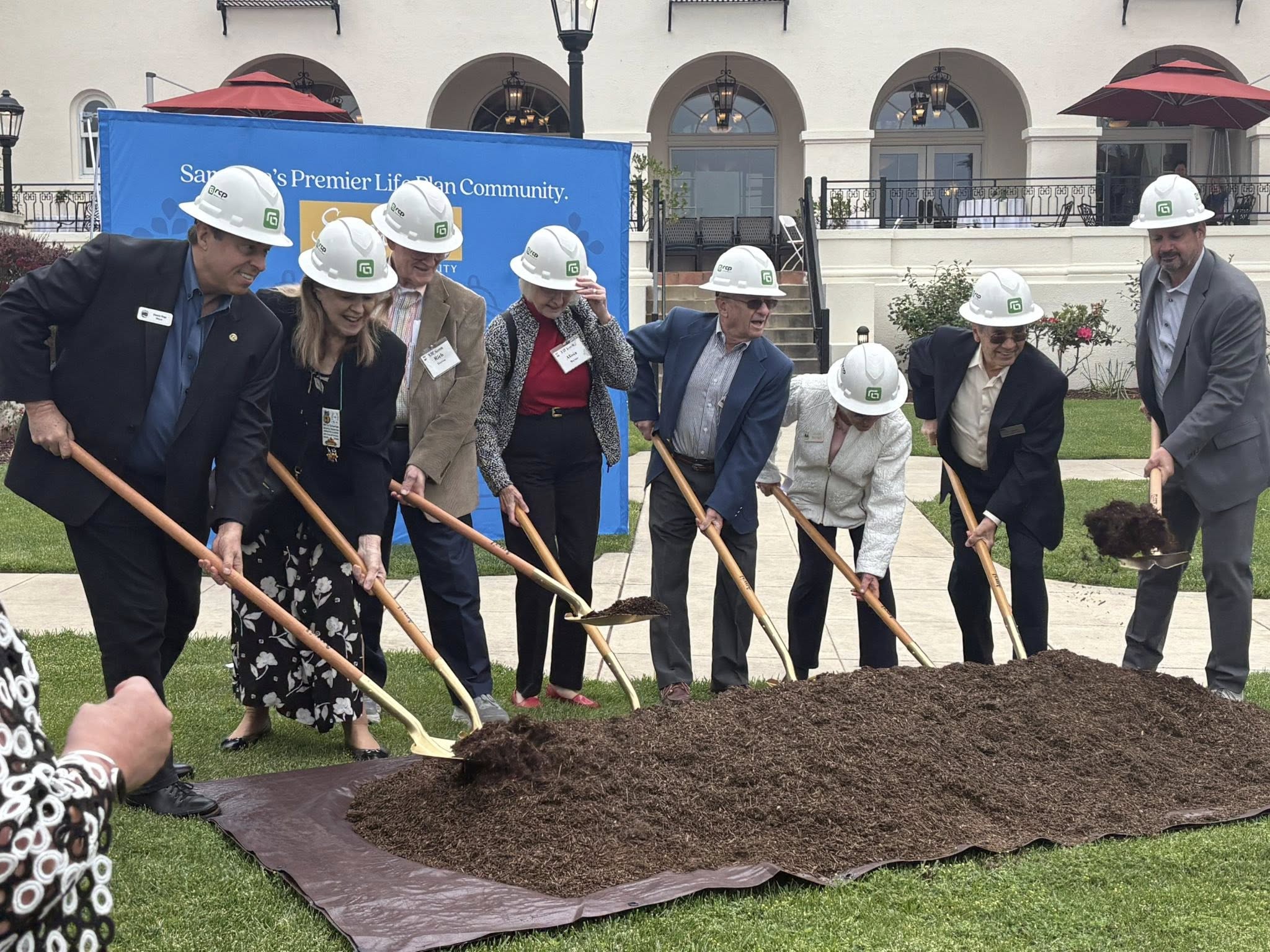
Financing of the $101.7 million project closed at the beginning of April 2026. The bonds — Series 2026AB, issued through the California Statewide Communities Development Authority, insured under the Cal-Mortgage Insurance program, rated AA- by S&P, and underwritten by Ziegler — were oversubscribed by investors, many of whom were new to OFHC. Construction broke ground on April 27, 2026, with members of the Board, the Saratoga management team, and Transforming Age leadership turning the first spades of dirt on the campus that has been the Order's home for more than a century.
The project will deliver fifty-two new apartment homes across three new residential buildings and a single-story cottage, in fifteen distinct floor-plan styles ranging from just over a thousand square feet to nearly two thousand. It will add a new 3,300-square-foot auditorium suitable for performances, lectures, and community events, with sixteen garage parking spaces below it; a new 1,000-square-foot fitness room with modern equipment; an elegant new dining venue; and expanded underground and surface parking. The total new construction exceeds 170,000 square feet.
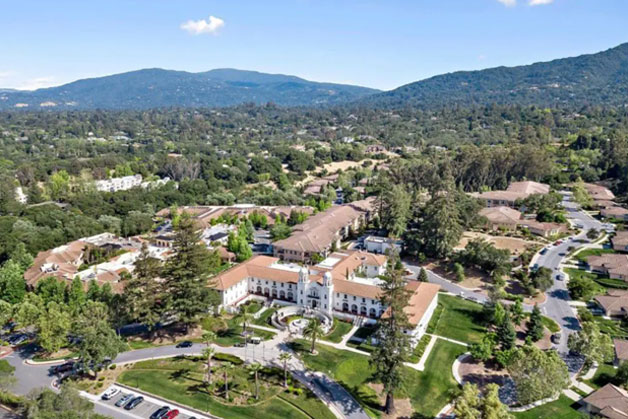
Completion is anticipated in the spring of 2028. With more than 130 prospective residents already on the waitlist, the expansion will allow Saratoga to serve a generation of seniors that the original Manor could not — and to do so on the same thirty-seven-acre campus where the Order has cared for its elders since 1913. It is the largest single investment in the home's history. The Board believes it will position Saratoga to thrive for another fifteen, fifty, and one hundred years.
Legal status
The Odd Fellows Home of California is a 501(c)(3) nonprofit public benefit corporation, operating under the laws of the State of California. It was founded to provide housing and care services for elderly and handicapped members of the Independent Order of Odd Fellows and, if space permits, for the general public. OFHC operates two retirement communities — Saratoga Retirement Community and The Meadows of Napa Valley — offering levels of care from independent living to skilled nursing, while maintaining a commitment to the charitable purposes mandated by its 501(c)(3) status.
OFHC is distinct from the Grand Lodge of California, which is classified as a 501(c)(8) fraternal organization. While both classifications are tax-exempt, their purposes and responsibilities differ. A 501(c)(3) corporation must be organized and operated exclusively for charitable, educational, or scientific purposes, and all revenue must be reinvested in the organization to further that mission. In contrast, a 501(c)(8) fraternal organization is primarily focused on providing benefits to its members through social and fraternal activities.
The Grand Lodge of California maintains significant control over OFHC through its authority to elect members to the OFHC Board of Directors — four Odd Fellows, three Rebekahs, and four at-large members. The Rebekah Assembly of California, though it elects a minority of the board members, has no ownership interest in OFHC. This governance structure ensures that the Grand Lodge can influence key decisions while the operation of the retirement communities remains professional and mission-aligned.